
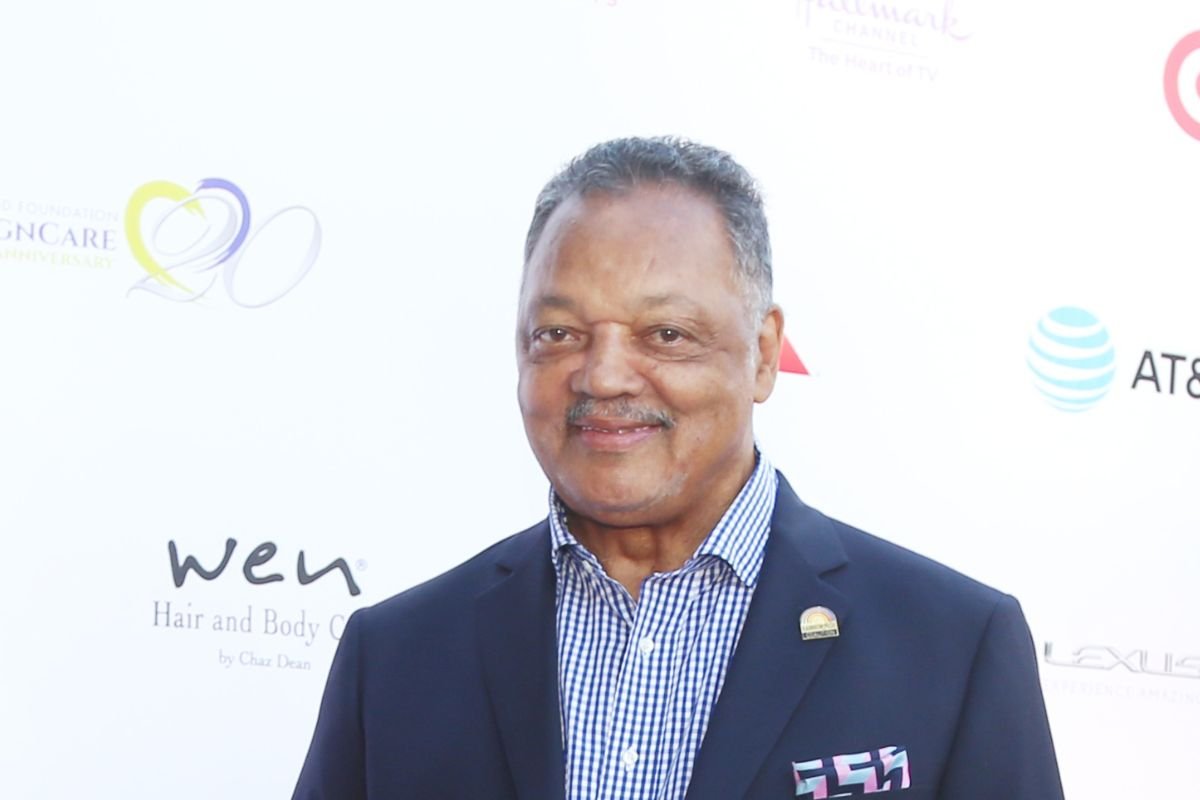
Rev. Jesse Jackson died Tuesday morning at his Chicago home. He was 84. Jackson’s family confirmed his death. “It is with profound sadness that we announce the passing of civil rights leader and founder of the Rainbow PUSH Coalition, the Honorable Reverend Jesse Louis Jackson Sr. He died peacefully on Tuesday morning, surrounded by his […]
Rev. Jesse Jackson died Tuesday morning at his Chicago home. He was 84. Jackson’s family confirmed his death.
“It is with profound sadness that we announce the passing of civil rights leader and founder of the Rainbow PUSH Coalition, the Honorable Reverend Jesse Louis Jackson Sr. He died peacefully on Tuesday morning, surrounded by his family,” the statement said.
“Our father was a servant leader — not only to our family, but to the oppressed, the voiceless, and the overlooked around the world,” the Jackson family said. “We shared him with the world, and in return, the world became part of our extended family. His unwavering belief in justice, equality, and love uplifted millions.”
The civil rights icon battled progressive supranuclear palsy for over a decade. The disease affects walking and swallowing. Jackson was hospitalized in November before returning home.
Jackson’s voice became the backbone of Hip-Hop’s political awakening. His famous “I Am Somebody” speech got sampled countless times by rap’s biggest names. Public Enemy built their sound around Jackson’s words.
Chuck D used Jackson’s speeches as the foundation for tracks like “Rebel Without a Pause,” from the group’s groundbreaking second album, 1988’s It Takes a Nation of Millions to Hold Us Back.
“Jesse Jackson was our CNN before we had CNN,” Chuck D said in past interviews. The rapper credited Jackson with teaching Hip-Hop how to speak truth to power.
A Tribe Called Quest sampled Jackson’s voice on “Oh My God.” The Clipse used Jackson’s speech on “Inglorious Bastards” and newer artists like Kendrick Lamar have also referenced Jackson’s civil rights work.
Jackson’s relationship with Hip-Hop wasn’t always smooth. He criticized rap music in the 1990s for explicit content. Jackson called some lyrics “degrading” to Black women and communities.
But Hip-Hop artists respected Jackson’s civil rights legacy. They understood that his concerns came from wanting the best for Black youth.
Jackson ran for president twice in the 1980s. His campaigns inspired a generation of Black political leaders. Hip-Hop artists saw Jackson as proof that Black voices could reach the highest levels.
Born in South Carolina in 1941, Jackson worked alongside Martin Luther King Jr. He founded Operation PUSH in 1971 to fight economic inequality. The organization became Rainbow PUSH Coalition in 1996.
Jackson’s “I Am Somebody” chant became Hip-Hop’s unofficial anthem. The call-and-response format matched rap’s energy perfectly. Artists used Jackson’s cadence to build their own political messages.
The reverend understood Hip-Hop’s power early. He appeared at rap concerts and spoke at Hip-Hop events. Jackson saw the culture as a way to reach young people.
Jackson’s family includes five children. His son Jesse Jackson Jr. served in Congress. His daughter, Santita Jackson, works in the media.
Hip-Hop artists posted tributes Tuesday morning. Many shared memories of meeting Jackson at events.
Fans can watch Jackson’s musical legacy in *Save the Children* on Netflix. The 1972 concert film features Jackson alongside the Jackson 5, Marvin Gaye and other soul legends. The documentary was recently restored after being lost for 50 years.
